

|
International Participation, Bioeconomy, and Blue Innovation at the
|
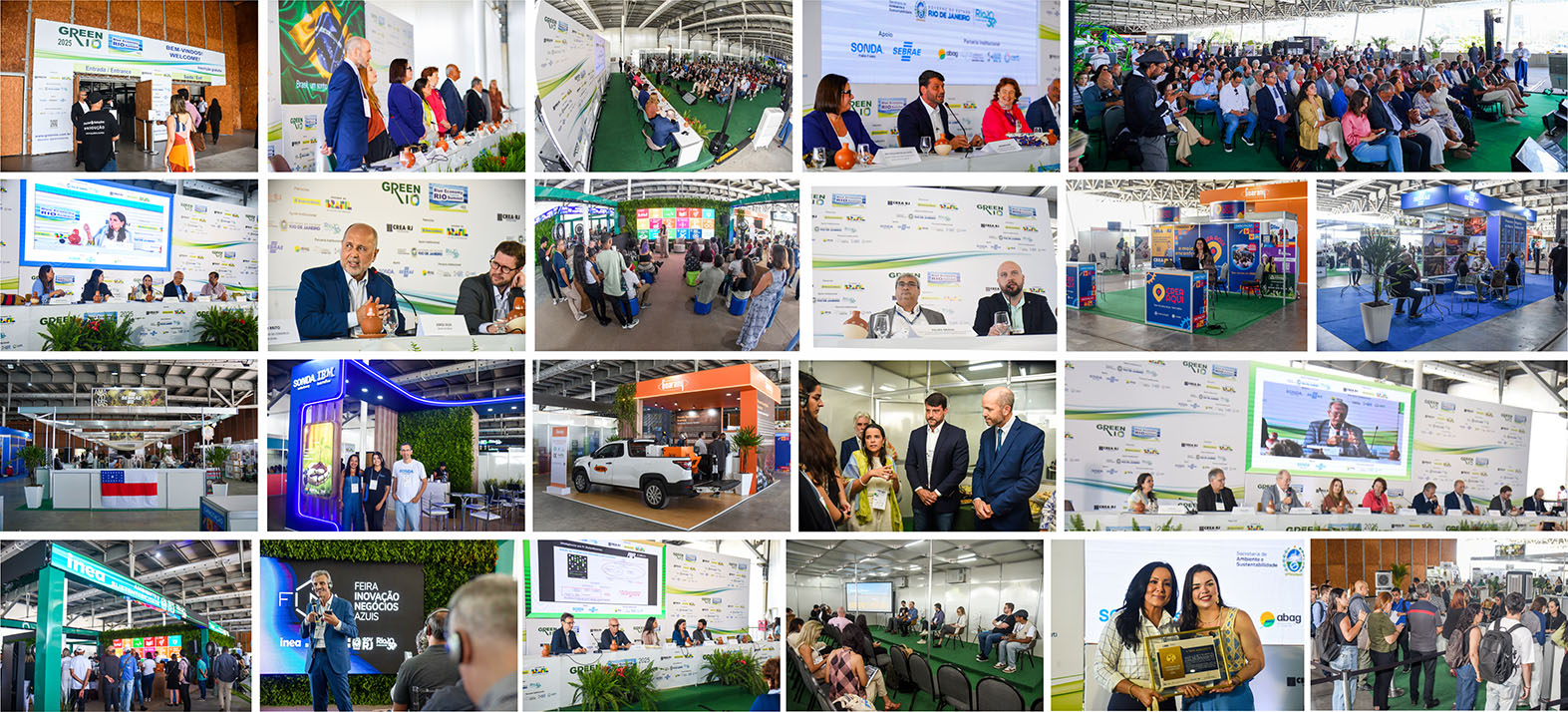
The 13th edition of the Green Rio / Blue Economy RIO Summit 2025 once again took place at Marina da Glória, Rio de Janeiro, RJ. From November 27th to 29th, representatives from various countries connected through themes related to Bioeconomy, Blue Economy, Green Technologies, Food Security, Cities, and Climate. Over the three days, the event brought together 4,591 visitors and 94 exhibitors. A major highlight of this edition was the inclusion, on the first day of the event, of the first OECD Rural Conference in Latin America, where Green Rio Day was held.
The event was supported by the State Secretariat for the Environment and Sustainability (SEAS) and the Government of the State of Rio de Janeiro, represented at the opening by Secretary Bernardo Rossi. SEAS was present with an institutional stand, auditoriums, and participation in several panels.
See how SEAS-RJ participated in Green Rio / Blue Economy Rio.
Banco do Brasil was among the sponsors, represented at the opening by its superintendent in Rio de Janeiro, Ana Paula Matos, and actively participating in the COP30 Echoes panel.
The Regional Council of Engineering and Agronomy (CREA-RJ) was also a sponsor, represented at the opening by its president, Miguel Fernández. The council presented its main areas of activity through an institutional stand and its presence in the program on sanitation topics and the Brazil-Germany bioeconomy workshop.
Check out CREA RJ’s participation in the event.
SEBRAE participated with representatives from the states of Rio de Janeiro and Amazonas. Rio de Janeiro brought entrepreneurs working in the area of small maritime businesses. SEBRAE Amazonas represented companies primarily in the bioeconomy sector related to food and cosmetics.
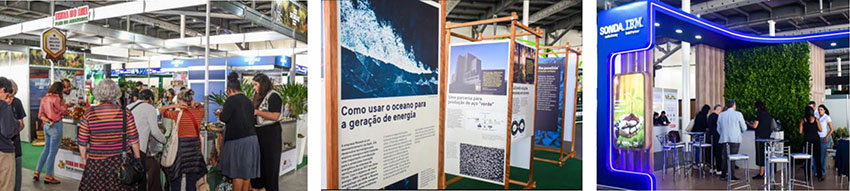
SONDA presented technological solutions at its booth to address climate and environmental challenges related to decarbonization and the circular economy.
The event had institutional partnerships with: Consórcio Amazônia Legal, ABAG, Fundação CERTI, and the Naval Technological Cluster.
Green Rio / Blue Economy Rio Summit Content
COP30 ECHOES PANEL
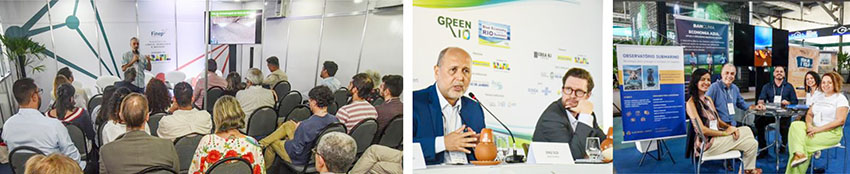
The COP30 Echoes panel at Green Rio was one of the main highlights of the event, bringing together experts and representatives to analyze the results of the conference in Belém. Banco do Brasil, Consórcio Amazônia Legal, ABAG, Fundação Certi, SEAS RJ, Sebrae AM and OECD were part of the program.
Check out the special report on the COP30 Echoes panel
The afternoon of November 27th was dedicated to the Blue Economy Rio Summit in the main auditorium. The panel “The Power of the Blue Economy” was moderated by Ana Asti and featured Alvaro Sardinha from Portugal. Oriana Romano, Head of Unit, Water Governance and Circular Economy Division of the OECD, participated for the second time in the Blue Economy Rio Summit. Following this, the panel on “Sanitation and Bays” also included the participation of CREA RJ, SEAS, and experts on the subject.
The Blue Rio startup program concluded with presentations from various startups and the presence of large companies and investors in the blue economy sector.
The bioeconomy room hosted debates focused on industrial innovation and regional development, beginning with a panel from SENAI FIRJAN on sustainable solutions. Subsequently, SENAR-RIO promoted a roundtable discussion on rural tourism as a sustainable business opportunity. The debate included accounts from producers, who exemplified how the integration between local production and tourism strengthens the economy of the interior of Rio de Janeiro state.
On the morning of the 28th, the Brazil-Germany Workshop was held once again at the Green Rio / Blue Economy Rio Summit with the theme “Bioeconomy and Green Transition”. Ten representatives from Brazil and Germany participated in the debates involving agriculture, bioeconomy, decarbonization, and energy.
Brazil-Germany Participation at Green Rio
Friday’s program also marked the Brazilian debut of FINA (Blue Innovation and Business Fair). Inspired by the success of its first edition in Lisbon, the space was a point of convergence for the presentation of technological projects, bringing together large companies, small businesses, municipalities, and associations.
First edition of FINA (Blue Innovation and Business Fair) at Green Rio/Blue Economy Rio Summit
The panel on the WIPO Green project brought together results from the technological innovation initiative for the rural environment and INPI’s experiences in intellectual property, including its partnership with Japan. Phase 4 of the project was executed by Agrosuisse.
See how the WIPO Green panel went
Other debates were held throughout the day, involving bioeconomy and technology, moderated by the Undersecretary of Agriculture, Felipe Brasil, and the president of Guarany, Alida Bellandi. It was also the day of the Conleste agricultural technical chamber meeting with secretaries from various municipalities, such as Maricá, Cachoeiras de Macacu, and Itaboraí, concluding the day with a debate on the cocoa supply chain in the state of Rio, led by the representative of the Ministry of Agriculture, Celso Merola.
The potential of municipalities and financial institutions was also on the agenda in the panel “Blue Economy – Transforming Agents”. The debate brought together experts such as Marcus Cardoso Santiago, representative of BNDES. The meeting focused on the role of local and regional leaders in implementing practical solutions to contemporary environmental challenges.
Sebrae Rio promoted a series of activities aimed at strengthening the ocean economy, highlighting the presentation of the Sebrae Entrepreneurial City Hall Award in the Blue Economy category and the detailing of the Saquarema Blue Potential Mapping Project. During the event, the booklet “Small Blue Businesses” was launched.
On Saturday the 29th, a panel dedicated to food security, school meals, and regenerative agriculture, moderated by UniRio, brought together experts to discuss the integration between nutrition and sustainable production. IBAM (Brazilian Institute of Municipal Administration) had a stand and panels dedicated to the relationship between cities and climate. The Incluir Petrópolis program organized debates on accessibility in municipalities.
At the closing of the program, the Special Secretariat for Metropolitan Integration (SEIM) of the Rio de Janeiro City Hall promoted a seminar focused on the articulation of 21 municipalities, including the capital. The meeting was attended by Secretary Cynthia Felix.

Bioeconomy, Technologies, and the Blue Economy
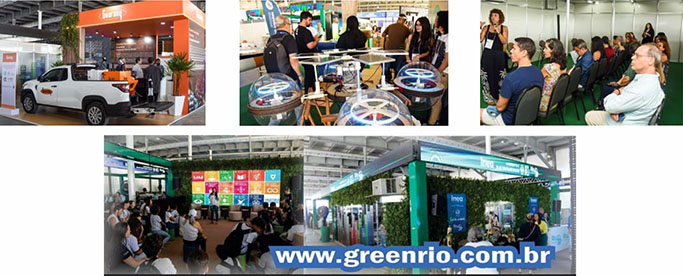
Green Rio / Blue Economy Rio Summit 2025 brought together a diverse range of stakeholders at Marina da Glória, totaling 94 exhibitors from different sectors and regions.
The richness of the Amazon region was also highlighted through Sebrae Amazonas, with its traditional exhibition of biodiversity products, and the Amazônia 4.0 organization, which used a dome with bio-factories and virtual reality glasses to provide visitors with a technological immersion in the forest. Funding and industry institutions, such as SENAR Rio, FINEP, and FIRJAN, occupied auditoriums to present programs focused on the green economy and decarbonization.
SONDA Brasil, a regional leader in Digital Transformation, presented its water loss management platform using artificial intelligence.
In the industrial sector, Guarany demonstrated products geared towards sustainable agriculture, reinforcing the connection between industry and technological research.
The Secretariat for Interior Development of the State of Rio de Janeiro and Emater presented the variety of agricultural production in Rio de Janeiro, along with AproRio, an association of rural producers. SENAR Rio also showcased projects featuring products with regional characteristics, in addition to its work in rural education. Sebrae Rio participated with its stand, showcasing initiatives for small businesses in the maritime sector and also holding business meetings in a parallel room at Marina da Glória.
In the field of science and technology, UFRJ presented innovations such as the algae totem and the A~MARLab floating laboratory station, focused on collecting environmental data in polluted waters. The scientific innovation ecosystem was reinforced by the presence of Embrapa, UFRRJ, and UERJ (University of the Sea), which brought initiatives focused on the bioeconomy market to the event. The international dimension was also represented with an exhibition from the Swedish Government, focused on circular economy projects carried out in the European country. The environment for new businesses was boosted by the presence of startups, represented through the BlueRio program, the Cariocas association’s stand, and SNASH (National Society of Agriculture), consolidating the event as a platform for fostering innovative entrepreneurship.
During the event, meetings focused on regional and institutional integration were held, such as the meeting of Conleste (Intermunicipal Consortium for the Development of Eastern Fluminense).
Check out the full list of exhibitors at Green Rio / Blue Economy Rio.
FINEP Auditorium Hosted a Groundbreaking Panel on Biorefineries
For three days, the FINEP auditorium brought together speakers from various organizations, presenting FINEP programs, debates on scientific content and innovation, among other topics.
One of the main highlights was the panel discussion “Biomass as an opportunity for industrial development: challenges of implementing biorefineries in Brazil.” The event was organized through a partnership with different institutions, such as GEBio/UFRJ, MDIC, and FINEP.
Check out complete information about the Biorefineries panel.
Green Rio terms of use and privacy policies