



|
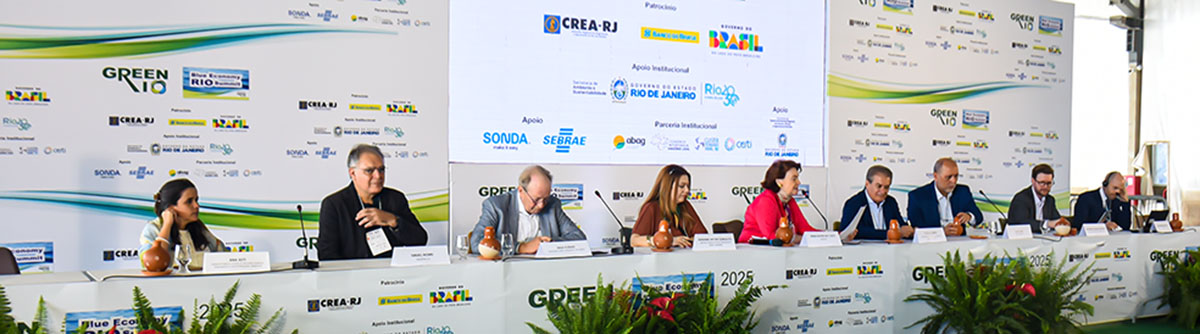
Echoes of COP30 were highlighted at the Green Rio/Blue Economy Rio Summit.
|
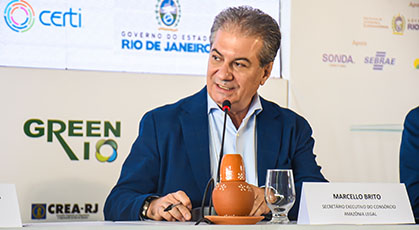
Fresh from Belém, Marcello Brito opened the panel in his capacity as Executive Secretary of the Legal Amazon Consortium and also as Special Envoy for COP30, focusing on Amazonian subnational governments. An early enthusiast of the idea of holding COP30 in the Amazon, Marcello considers the COP30 being held in the Amazon a watershed moment, an innovative COP whose results overcame the challenges encountered, and whose important legacy was getting Brazil to discuss the Amazon. Pará provided a powerful counterpoint to so much harsh criticism.
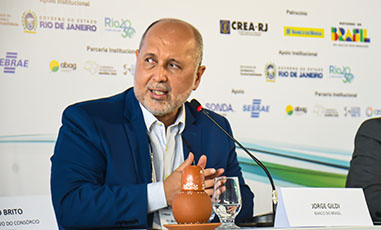
Jorge Gildi, from Banco do Brasil, highlighted the bank’s strong presence at COP30. It launched its carbon credit trading desk, becoming the first major Brazilian bank to facilitate the buying and selling of these credits. It also focused on bioeconomy, sustainable agriculture with Ecoinvest, and innovation, reinforcing its commitment to sustainable finance and the climate agenda through partnerships and green financing.
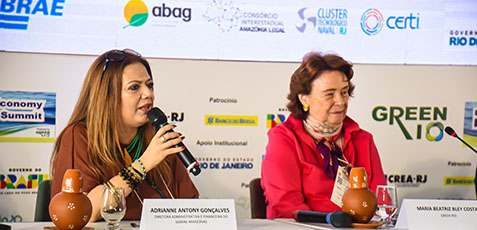
Adrienne Gonçalves, from Sebrae Amazonas, emphasized that this was the first COP that opened space for entrepreneurship, especially for women’s entrepreneurship and that of riverside communities. SEBRAE offered opportunities for all entrepreneurs in the Amazon, and this deserves to be recorded. Adrienne presented a beautiful video that gives a small glimpse of how relevant Amazonian entrepreneurs are to the preservation of our forest. Adrienne made a point of honoring the 12 entrepreneurs from the state of Amazonas who came to Green Rio 2025, some of whom gave testimonials about COP30, where they had the opportunity to show that micro and small entrepreneurs are strategic for the local and regional economy.
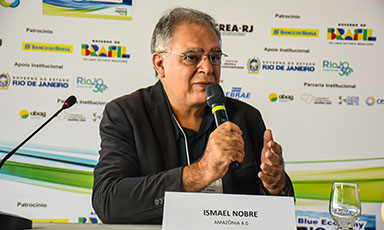 Ismael Nobre also praised the fact that COP30 took place in the Amazon, commenting that the panels he participated in were enriching and contributed to expanding the network of the Amazon 4.0 Institute, of which he is president. Ismael endorsed the dissatisfaction that environmentalist Carlos Nobre expressed to the press, citing:
– Roadmap was left out;
– Global Adaptation Target (GGA) weakened;
– Climate finance still far below what is needed;
– Mitigation without structural advances;
However, Ismael also pointed out positive aspects:
– Indigenous rights recognized as a climate strategy;
– Brazil promises to move forward with the Roadmap;
– International trade officially enters the agenda;
– Approval of the Belém Gender Action Plan;
Ismael is confident in the projects that Amazônia 4.0 will carry out with new partners and new contacts made during COP30.
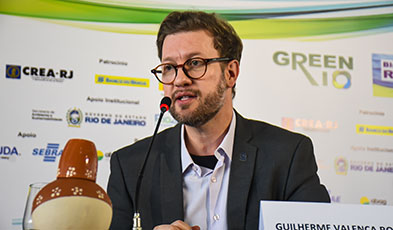 Guilherme Rodrigues, from CERTI, brought to the panel the recently inaugurated “Bioeconomy Park” in Belém/PA, which integrates innovative entrepreneurship mechanisms with a laboratory-factory for the development of startups and socio-biodiversity products. According to Guilherme, the “Bioeconomy Park” has the potential to work with traditional/indigenous/riverine communities and associations/cooperatives in maintaining the forest standing. Guilherme emphasized that the “Bioeconomy Park” will serve all states in the Legal Amazon region.
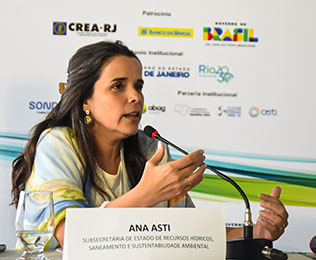
Ana Asti, Undersecretary of Water Resources and Sustainability – Rio de Janeiro, was particularly pleased with this COP30, in which the Blue Economy was included for the first time. Ana also highlighted the positive aspect of the presence of subnational entities, where regional and municipal levels had a voice. The relationship between Climate and Cities was present at COP30 and discussions took place with countries from various continents, making it a multilateral COP.
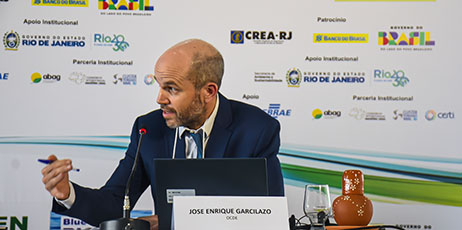 Enrique Garcilazo, OECD, commented on the presentation of more than 35 virtual events. The OECD’s COP30 Virtual Pavilion covered a wide range of topics and brought together leading experts, policymakers and civil society. Important analyses and data from the OECD were presented to inform action on climate change.
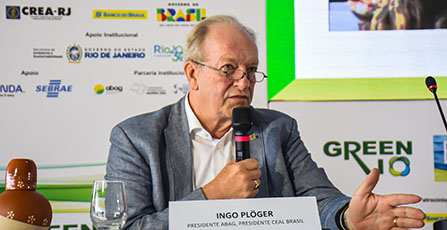
Ingo Plöger, president of ABAG, assessed the proposed action agenda. He reiterated to the world how Brazil has invested in increasingly sustainable and low-carbon food, fiber, and bioenergy production through the use of science, technology, and innovation. Ingo highlighted AgriZone, a structure set up by Embrapa in conjunction with the Ministry of Agriculture and Livestock (MAPA), and how the partnership with relevant sectoral entities played a strategic role in enabling international negotiators to understand the role of tropical agriculture in mitigating and adapting to climate change.
Green Rio terms of use and privacy policies